
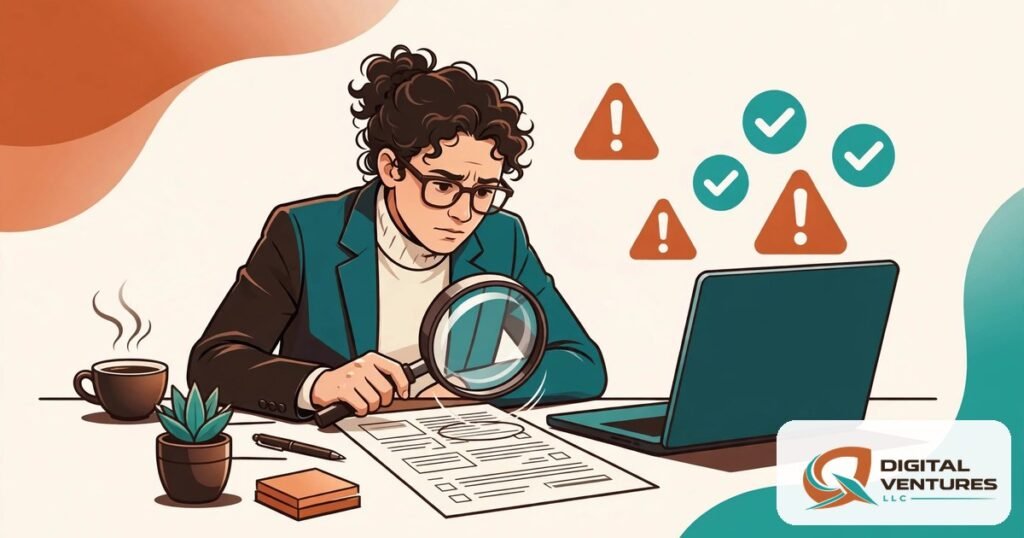
9 Web Designer Red Flags to Spot Before You Sign
Hiring a web designer is one of the biggest investments a small business owner makes — and one of the easiest to get wrong. The difference between a website that brings in customers and one that quietly drains your budget usually isn’t talent. It’s the process, the contract, and the honesty of the person selling it. Knowing the web designer red flags before you sign is the cheapest insurance you’ll ever buy.
Most web designers are honest people doing good work. But a few patterns come up so consistently — vague pricing, ownership traps, vanishing support — that they’re worth knowing cold. Study this list of web designer red flags like a pre-flight checklist: a few minutes now can save you thousands later. We’ve spent over a decade building websites for US service businesses, and we’ve cleaned up enough projects gone sideways to know exactly where the damage starts. Here are the nine web designer red flags to spot before you sign anything.
Red Flag 1: No Written Contract or Itemized Scope
The clearest of all web designer red flags is a designer who wants to start on a handshake — and it’s the easiest to avoid. Verbal agreements leave you with no recourse if the project stalls, the scope balloons, or the deliverables don’t match what was promised. One industry vetting guide puts it bluntly: anyone who can’t break down cost by deliverable before you sign shouldn’t be trusted with your budget either (https://webhelpagency.com/blog/how-to-hire-a-web-designer/).
A professional engagement should always have a contract or proposal — even a brief one. It should spell out the pages, features, revisions, timeline, and price. No contract means no agreed definition of “done,” and “done” is exactly where disputes start. Of all the web designer red flags on this list, this is the one that makes every other problem harder to fix.
What a real contract includes
At minimum: an itemized scope of work, a delivery timeline with milestones, a revision policy, payment terms tied to those milestones, and a clear statement that you own the domain, files, and content. If a proposal is missing any of these, ask for them in writing before you agree to anything.
Red Flag 2: Pressure to Pay 100% Upfront
A deposit is normal. Milestone payments are normal. Paying the entire project cost before a single pixel exists is not. Reasonable structures look like 30–50% to start, the rest tied to milestones or launch. When a designer demands full payment upfront, ask yourself why they need your money more than your trust. This particular entry on any web designer red flags list deserves extra attention because it usually appears alongside the others.
This is one of the web designer red flags that pairs with others: designers who push for full payment upfront are also the ones most likely to disappear after it clears. Spotting web designer red flags early — while you still have leverage — is the whole point of doing your homework before the first invoice.
Red Flag 3: Vague or Missing Pricing Breakdown
“If you have to ask, you can’t afford it” is fine for art galleries, not for web projects. When you ask what the project costs and get a single number with no explanation of what it includes — how many pages, what features, what happens if you need changes — you are looking at a quote designed to grow later.
The dependable way to compare designers is to send the same written brief to at least three candidates and compare itemized quotes side by side (https://justwebworld.com/things-consider-when-hiring-web-design-company/). Anyone who refuses to itemize, or whose quote reads like a single line item (“website: $3,500”), is hiding something — usually the limitations of what that number actually covers. A cheap quote with no scope often means a generic template with little customization, and costs that appear later.
What itemized pricing looks like
A trustworthy quote breaks the project into line items: discovery and strategy, design (number of page templates), development, content and copywriting, revisions included, launch and testing, and post-launch support. When one of the web designer red flags you’re screening for is vague pricing, this is the standard to hold every quote against.
Red Flag 4: No Live Portfolio — Screenshots Only
Screenshots can be mocked up in an afternoon. Live websites can be opened on your phone, clicked through, and tested. When a designer’s portfolio is all static images with no links to working sites, you can’t verify load speed, mobile behavior, or whether the sites even still exist.
Open a few of their sites on your phone. Do they look different from each other, or like the same template with different logos? Broken, slow, or non-mobile-friendly portfolio sites are web designer red flags that tell you exactly what you’d be buying. Among common web designer red flags, a missing or fake portfolio is the easiest to check — it takes five minutes and tells you everything.
Red Flag 5: They Won’t Say Who Owns the Site
This is the trap that costs business owners the most. Some designers register your domain in their own name, hold your hosting account, or build the site on a proprietary system you can’t access. Everything works fine — until the relationship ends. Then you discover the domain you’ve been advertising for years isn’t legally yours, or that “your” website disappears the month you stop paying a rental fee.
Ask directly, in writing: who owns the domain, the hosting account, the files, and the content when the project is done? If the answer is cagey, evasive, or “we handle all of that for you” without naming you as the owner, walk away. Ownership evasion is one of the costliest web designer red flags because the damage only appears when you try to leave. Your domain should be registered in your name or your business name, period. A designer who locks you into systems you cannot access is building a dependency, not a website (https://lavendergiraffe.com/what-to-look-for-when-hiring-a-web-designer-for-your-small-business/).
Red Flag 6: Guaranteed #1 Google Rankings
No one controls Google’s results. Anyone promising a set ranking by a set date is guessing — or lying. This is a scam signal, full stop. It appears on every serious list of web designer red flags for a reason: it preys on the exact misunderstanding that costs small businesses money. If you remember only one entry from this web designer red flags guide, make it this one.
What a good designer says instead: “We’ll build the site so Google can read it properly — clean headings, fast loading, proper titles, a page for each service — and we can talk about an SEO plan after launch.” Realistic language about results is a green flag. Guaranteed rankings are the reddest flag in the drawer.
Red Flag 7: No Interest in Your Customers
Watch the first meeting. If it’s all fonts, colors, and animations, and never about who buys from you, what they worry about, and why they’d choose you — the site is being built for the designer’s portfolio, not your business. This is one of the subtler web designer red flags: it doesn’t feel like a scam, it just feels like a designer who never asked the questions that matter. One 2026 hiring guide nails it: no interest in your customers means the finished site will impress other designers and confuse your buyers (https://primestackservices.com/how-to-choose-a-web-designer-uk-small-business-2026/).
A designer worth working with asks about your business and your customers before talking about design. They want to know what a visitor should do on the site and what would convince them. If those questions never come, the strategy behind the design doesn’t exist — and “no curiosity about your customers” belongs on your personal web designer red flags shortlist.
Red Flag 8: No Process, No Timeline, No Revision Policy
A professional web design project has a clear structure: discovery, design, development, review, and launch. Vague answers about timelines usually mean vague delivery. When you ask “how long will this take?” and get “it depends” with no milestones, you’re signing up for a project with no end date — and “no end date” is one of the most frustrating web designer red flags to discover mid-project.
Equally important: revisions. Ask how many revision rounds are included and what happens when you want changes beyond them. No defined process for revisions or feedback is exactly where scope creep and disputes start (https://webhelpagency.com/blog/how-to-hire-a-web-designer/). When you’re screening for web designer red flags, “we’ll figure out the timeline as we go” should end the conversation. Get the timeline, the milestones, and the revision policy in the contract — before money changes hands.
Red Flag 9: Radio Silence After Launch (No Support Plan)
Many designers disappear the moment the invoice is paid. Then a plugin update breaks the contact form, the site goes down on a Saturday, and you’re on your own. This is one of the most expensive web designer red flags because it only shows up after you’ve paid in full.
Before you sign, ask: what happens after the site goes live? Who fixes it if something breaks? Is support included, and for how long? Get the aftercare in writing. A designer who offers a clear maintenance plan — updates, backups, security monitoring, a way to reach them — is planning to stand behind the work. One who changes the subject when you ask about support is planning to leave, and that silence is one of the most expensive web designer red flags of all.
What good aftercare looks like
At minimum: 30–90 days of included bug fixes after launch, a defined update and backup routine, and a named contact for emergencies. Paid maintenance plans are normal and often worth it — what’s not normal is a designer with no answer at all.
What a Good Web Designer Looks Like (The Green Flags)
Knowing the web designer red flags is half the job. The other half is recognizing what good looks like, so you can say yes with confidence. Keep this green-flags table next to your web designer red flags checklist when you compare candidates:
| Green flag | What it tells you |
|---|---|
| Written contract with scope, timeline, and revision count | They define “done” before starting |
| Clear, itemized pricing | You know what every dollar buys |
| Live portfolio you can inspect on your phone | Their work survives contact with reality |
| You own the domain, hosting, and files | No hostage situations, ever |
| Realistic language about SEO and results | Honest about what they can and can’t control |
| Asks about your customers first | The site will be built to convert, not to impress |
| Defined post-launch support terms | They’ll be there when it matters |
| Responsive during the sales process | Communication rarely improves after you pay |
A trustworthy designer explains their process in plain language, puts it in writing, and sticks around after launch (https://jesscreatives.com/blog/hiring-a-web-designer-tips-and-warning-signs/). Spotting web designer red flags is really about spotting the absence of these green ones. That combination is rarer than it should be — and more valuable than any design trend.
5 Questions to Ask Before You Sign
Take these into every first meeting. Ask every candidate the same questions and compare answers side by side — the gaps in confidence and detail tell you more than any portfolio (https://webhelpagency.com/blog/how-to-hire-a-web-designer/). These questions are designed to surface web designer red flags that polished sales pitches hide.
- What’s your design process from start to finish? You’re listening for structure: discovery, design, development, review, launch — not “we’ll figure it out as we go.”
- Who owns the site, domain, and files when we’re done? The only acceptable answer names you. Get it in writing.
- What’s included in the price, and what costs extra? Itemized scope, revision count, and a clear line between included work and change orders.
- What happens after launch? Support terms, update policy, who to call when something breaks, and for how long.
- Can I see two or three live sites and talk to their owners? Live links plus references. If either is refused, ask yourself what they’re protecting.
Web Designer Red Flags: Frequently Asked Questions
How much should a small business website cost?
Prices vary widely with site size, features, platform, and the designer’s location — there is no single reliable number. The US Bureau of Labor Statistics reported median annual pay for web developers and digital designers at $99,520 in 2025, which is why quotes far below the going rate for skilled work often mean a template with little customization or costs that appear later (https://justwebworld.com/things-consider-when-hiring-web-design-company/). Compare itemized quotes from at least three designers on the same brief — and keep this web designer red flags checklist open while you read them.
Is it normal for a web designer to ask for a deposit?
Yes — a deposit of 30–50% is standard and reasonable. What’s not normal is demanding 100% of the project cost before any work exists. Tie the remaining payments to milestones or launch so payment follows delivery. If a designer pushes back on milestones, treat it as one more web designer red flag and keep looking.
Who should own my domain name?
You should — registered in your name or your business name, with the hosting account under your control. If a designer registers your domain in their own name, getting it back after a falling-out can be a serious headache. Confirm ownership in the contract before the project starts. Of all the web designer red flags, this is the one with the longest tail: a domain dispute can haunt your business for years.
Should my web designer also do SEO?
Your designer doesn’t need to be an SEO specialist, but they should build the site so search engines can read it: sensible page titles, a page for each main service, fast loading, clean headings. Anyone promising guaranteed rankings is showing you web designer red flags in real time; anyone who can’t explain basic on-page SEO is a yellow one.
What should I do if I already signed with a designer showing these red flags?
Document everything in writing from this point forward, confirm ownership of your domain and files, and get any verbal promises into an email they confirm. If the relationship is already broken, a free SEO or website audit from an independent party can tell you exactly what you have — what’s salvageable, what’s missing, and what it would take to fix.
Why We Publish Guides Like This
We’re Qamar Digital Ventures LLC — a registered New Mexico LLC based in Albuquerque, with 10+ years of WordPress experience building websites for US service businesses. We’ve rebuilt enough projects that started with one of the web designer red flags above to know that an informed buyer is the best protection there is. You can read our story to see how we work, but the short version is this: honest scope, itemized pricing, you own everything, and we’re still here after launch.
We don’t do pressure tactics, we don’t rent you a website you can never own, and we don’t promise Google rankings no one can guarantee. If that sounds like the kind of designer you’d rather work with, book a consultation and let’s talk about your project.
Conclusion
The nine web designer red flags — no contract, full payment upfront, vague pricing, screenshots-only portfolios, ownership evasion, guaranteed rankings, no interest in your customers, no process or timeline, and no support plan — all point to the same underlying problem: a designer selling you a transaction instead of a partnership. The fix is straightforward. Print this web designer red flags list, ask the same five questions of every candidate, demand everything in writing, verify live work instead of screenshots, and trust the designer who gives you a straight answer over the one who gives you a sales pitch. A website is a long-term business asset; the person who builds it should behave like a long-term partner.
Book a real consultation — request a free SEO or website audit and we’ll review your current site or your designer’s proposal, flag any of these web designer red flags before they cost you money, or book a call to talk through your project.
Internal Link Suggestions
- Money page: free SEO or website audit (/free-website-seo-audit/)
- Conversion page: book a consultation (/book-a-call/)
- Brand page: our story (/about/)
- Sibling guide: “Web Design Pricing Transparency: Why Honest Quotes Beat Low Bids”
- Sibling guide: “The Web Design Discovery Process Explained”
Sources
- WebHelp Agency — How to Hire a Web Designer: 2026 Cost & Vetting Guide: https://webhelpagency.com/blog/how-to-hire-a-web-designer/
- Jess Creatives — Find a Web Designer in 2026: Tips and Warning Signs: https://jesscreatives.com/blog/hiring-a-web-designer-tips-and-warning-signs/
- Lavender Giraffe — Hiring a Web Designer for Small Business: https://lavendergiraffe.com/what-to-look-for-when-hiring-a-web-designer-for-your-small-business/
- PrimeStack Services — How to Choose a Web Designer for a UK Small Business: https://primestackservices.com/how-to-choose-a-web-designer-uk-small-business-2026/
- WebsiteDesigners.com — What to Ask Before Hiring a Web Designer: https://websitedesigners.com/blog/5-questions-to-ask-before-you-hire-a-web-designer/
- JustWebWorld — 5 Things to Check Before Hiring a Web Design Company: https://justwebworld.com/things-consider-when-hiring-web-design-company/
- Vannie Designs — How to Hire a Web Designer (What to Ask): https://vanniedesigns.com/how-to-hire-a-web-designer.html