
Table of Contents
- First, understand what “ranking higher” really means
- Reason 1: Their Google Business Profile is doing the heavy lifting
- Reason 2: They have more — and better — reviews
- Reason 3: Their website answers the search better than yours
- Reason 4: Google trusts them more (authority, citations, history)
- Reason 5: They show up across the whole customer journey
- Your 90-day plan to catch up
- Frequently asked questions
First, Understand What “Ranking Higher” Really Means
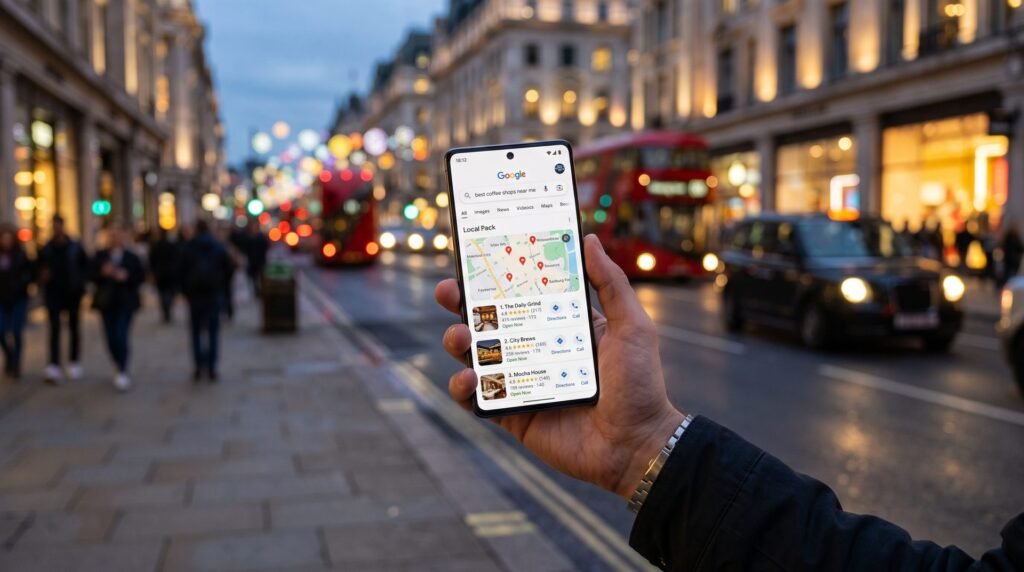
When a business owner says “my competitor ranks higher,” they usually mean one of three things: the competitor appears in the Google Map Pack (the map with three business listings), they hold the top organic positions under the map, or they show up when customers search on their phones — which is where most local searches happen.
The stakes are enormous. The number-one organic result captures a 39.8% click-through rate — more than double second place at 18.7% and nearly four times third place at 10.2% (FirstPageSage, 2024). And 74.2% of U.S. searches now end with no click at all (FirstPageSage, 2026), so if you are not visible in the results themselves, you may never earn the click. For local searches, 42–47% of clicks go directly into the Map Pack (Backlinko, cited in BrightLocal 2026 analysis). If your competitor owns the pack and you do not, they are visible while you are invisible.
The good news: outranking a competitor is rarely about one secret trick. It is about doing five or six fundamental things better than they do.
Reason 1: Their Google Business Profile Is Doing the Heavy Lifting
For local searches like “HVAC repair Albuquerque” or “dentist near me,” the Google Business Profile is the single most visible piece of real estate on the results page — the map, the star rating, the hours, the photos, and the click-to-call button, all before a customer ever sees a website.
When a competitor ranks higher, the first place to look is their profile versus yours:
- Completeness. Correct categories, service areas, hours, services with descriptions, keyword-rich business description. Empty fields are missed opportunities.
- Photos. Fresh job photos every week signal an alive, active business; three stock photos from 2021 signal an abandoned one.
- Posts and updates. Google Business posts — offers, seasonal reminders — give you more surface area in search.
- Accuracy. Name, address, and phone number must match your website and every directory listing exactly. Inconsistencies erode Google’s trust.
The data makes this urgent: 52% of U.S. consumers begin their local search on Google Search, with another 9% on Google Maps (BrightLocal, 2026), and 73% of local searches start on a mobile device (BrightLocal, 2026). On a phone screen, your profile is your first impression — often your only one. Our our Local SEO services starts with a full profile audit for exactly this reason.
Reason 2: They Have More — and Better — Reviews
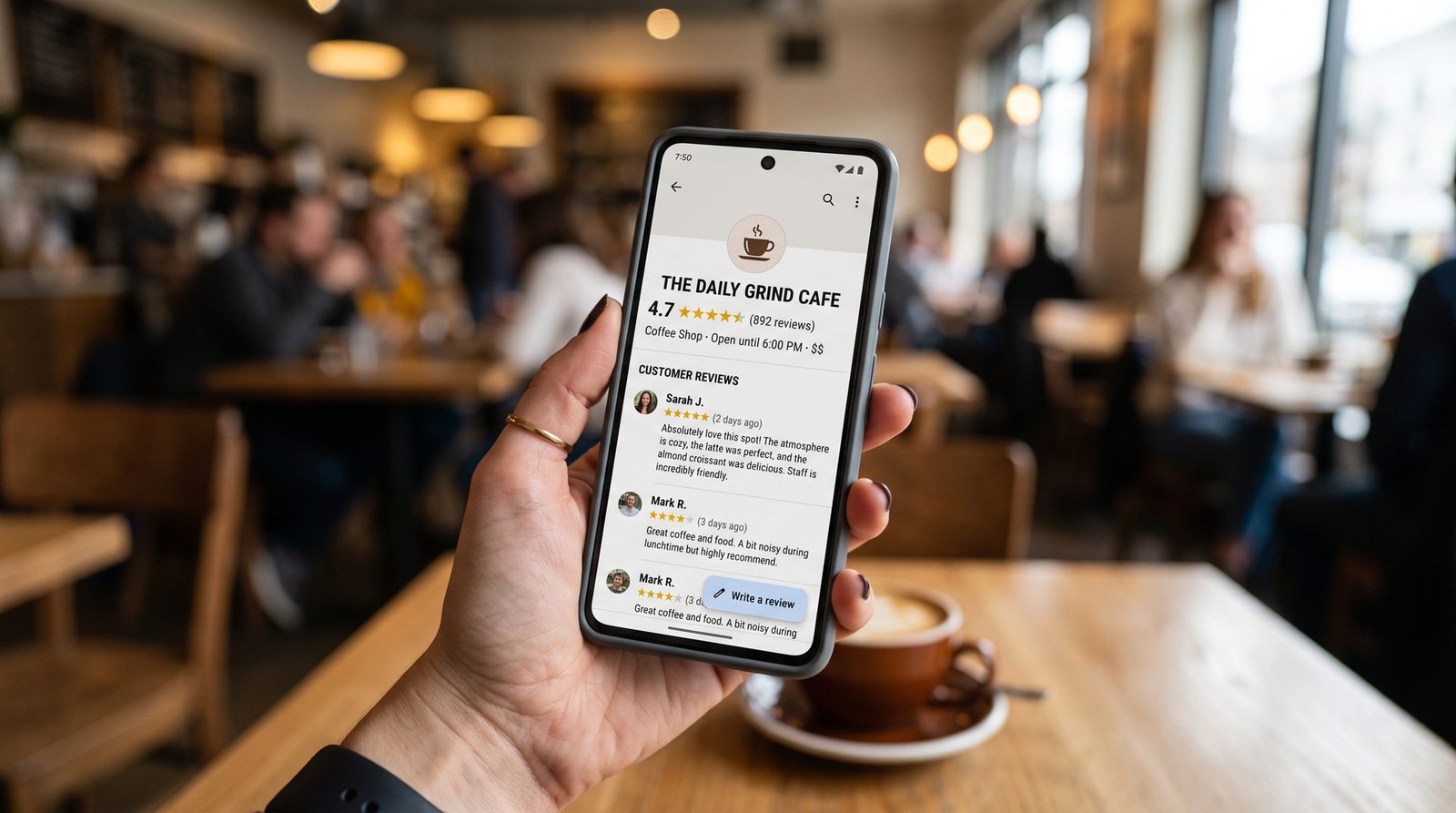
Reviews are the double-threat ranking factor: they directly influence local rankings and decide whether the customer calls you or your competitor. A competitor with 180 reviews at 4.8 stars beats a business with 14 reviews at 5.0 stars almost every time.
The 2026 data on review behavior is stark:
- 97% of consumers read reviews for local businesses, and 41% “always” read them — up from 29% just a year earlier (BrightLocal Local Consumer Review Survey, 2026).
- 68% require at least 4.0 stars before they will consider a business, and 31% will only use businesses at 4.5 stars or higher (BrightLocal, 2026).
- 47% won’t consider a business with fewer than 20 reviews — getting from zero to twenty matters more than going from twenty to two hundred (BrightLocal, 2026).
- Customers check an average of six review sites before choosing; Google remains the biggest single stop at 71% (BrightLocal, 2026).
Notice what this means: a competitor does not need fake reviews or a perfect score. They need a steady system — asking every happy customer, responding to every review, keeping the flow constant. Recency matters too: customers increasingly look for reviews from the last few weeks. If your competitor has twelve new reviews this month and your newest is from March, Google — and the customer — notices.
Stop guessing — get the facts
Free 10-minute website audit: we compare your rankings, Google Business Profile, and website against your top competitor’s — side by side — and show you exactly where the gap is. free 10-minute website audit. Or call +1 505-539-3288.
Reason 3: Their Website Answers the Search Better Than Yours
Google’s job is to satisfy the searcher. If someone searches “emergency plumber Albuquerque” and your competitor’s page has a clear headline, a click-to-call button, real service details, and fast loading — while your site has a generic homepage that loads slowly — Google has an easy decision.
What “answering the search better” looks like:
- Dedicated pages for each service and area. One page per service (“Roof Repair,” “Roof Replacement”) and per area you serve (“Plumber in Rio Rancho”). Ranking competitors usually have ten to thirty focused pages where you have five generic ones.
- Content that matches intent. A searcher wanting a price, a phone number, or proof of trust should find it in seconds. Thin pages with two generic paragraphs lose to substantive pages every time.
- Speed and mobile experience. 73% of local searches start on a phone (BrightLocal, 2026). A site that takes six seconds to load on mobile hands customers to the competitor whose site loads in two.
- Local signals on the page. Your city and service areas in titles and headings, an embedded map, LocalBusiness schema markup — the technical cues that tell Google exactly where you operate.
Decision speed matters here: 75% of consumers decide which business to use in under 30 minutes, and 72% look at three or fewer businesses (BrightLocal, 2026). Your website just needs to be the most convincing of the three options a customer actually compares.
Reason 4: Google Trusts Them More (Authority, Citations, History)
Rankings are, at their core, a trust contest. Google promotes the businesses it is most confident recommending, and that confidence is built from signals accumulated over time:
- Backlinks. Links from reputable sites — local news, the chamber of commerce, supplier directories, community sponsorships — are votes of confidence no one can fake overnight.
- Citations. Mentions of your business name, address, and phone number across directories (Yelp, Angi, BBB, Apple Maps, industry directories) verify you are real and established. The Whitespark Local Search Ranking Factors report ranks local citations the 4th strongest Map Pack ranking factor (Whitespark, 2024). Competitors with hundreds of consistent citations hold a structural edge over businesses with a dozen.
- History and consistency. A domain and profile active for eight years with steady reviews beats a six-month-old listing, all else equal. You cannot buy history — but every month you wait is a month your competitor extends the lead.
The gap is the compound interest of consistent SEO work — which is exactly what an SEO company should do every month.
Reason 5: They Show Up Across the Whole Customer Journey
The customer journey is no longer “Google it, click the first result.” 75% of U.S. consumers use multiple channels in a single local search journey — social media, AI tools, review sites — after that first Google search (BrightLocal, 2026, via EMARKETER). And 75% of consumers who used AI to find a local business still checked Google or Maps before contacting them (BrightLocal, 2026).
What does that mean in practice? Your competitor might not just outrank you on Google — they might be the business in the AI answer and have the reviews that confirm it and the social proof that closes the deal. With 31% of consumers now using AI monthly for local recommendations (up from 6% a year ago), the winners are visible everywhere customers look, not just in the ten blue links (BrightLocal, 2026).
The fix: be consistent everywhere that matters: an optimized Google profile, a fast website, active review generation, accurate citations, and content AI tools can cite. That combination is what Google Business Profile optimization is built to deliver.
The Competitor Gap Checklist
| Area | Compare this | You’re ahead when… |
|---|---|---|
| Google Business Profile | Completeness, photos, posts, accuracy | Every field filled, fresh photos and posts weekly, exact NAP everywhere |
| Reviews | Count, rating, recency, responses | 20+ reviews, 4.5 stars or higher, new reviews this month, every review answered |
| Website | Service/area pages, speed, mobile calls to action | Dedicated pages per service and area, loads in under 3 seconds, tap-to-call everywhere |
| Authority | Backlinks, citations, history | Consistent citations, real local links, steady history |
| Visibility | Map pack, organic, AI answers | Present everywhere the customer looks, not just the ten blue links |

Your 90-Day Plan to Catch Up
Outranking a competitor is a campaign, not a trick. Here is the sequence:
- Days 1–14: Audit and fix the foundation. Claim and fully optimize your Google Business Profile. Fix name/address/phone inconsistencies across your website and major directories. Make sure your site loads fast on mobile.
- Days 15–45: Build review velocity. Ask every happy customer for a review with a direct link. Respond to every review, good or bad. Cross the 20-review threshold fast, then keep the flow steady.
- Days 30–60: Expand your content footprint. Build dedicated pages for each core service and each Albuquerque-metro area you serve. Add LocalBusiness schema, clear calls to action, and click-to-call on mobile.
- Days 45–90: Build authority. Get listed in quality local and industry directories, pursue local press and sponsorship links, and publish useful content (pricing guides, seasonal maintenance tips) that earns links and AI citations.
- Ongoing: measure and iterate. Track Map Pack positions, calls from your profile, and website conversions monthly. Double down on what moves the needle.
Be realistic: a competitor with a five-year head start will not be overtaken in a month. But most local competitors are doing two or three of these things — not all five. Doing all five, consistently, is how you pass them.
Frequently Asked Questions
How long does it take to outrank a competitor on Google?
For local searches, most businesses see meaningful movement in 3–6 months of consistent work once the fundamentals (profile, reviews, site content) are addressed. Overtaking a deeply established competitor can take 6–12 months. Anyone promising page one in 30 days is selling something Google will eventually penalize.
Can I outrank a competitor who has been in business longer than me?
Yes. Longevity helps, but Google rewards relevance and current trust signals more than age alone. A newer business with a complete profile, 100 recent reviews, fast dedicated service pages, and consistent citations routinely outranks older businesses that coasted on reputation without maintaining their online presence.
Do Google Ads help me outrank my competitor organically?
No — ads and organic rankings are separate systems, and buying ads does not improve organic or Map Pack positions. Ads can put you above the organic results while you run them — a valid short-term play — but the visibility stops the moment you stop paying. Use ads for immediate leads and SEO for durable rankings.
Why does my competitor show up on Google Maps but I don’t?
Map Pack rankings depend heavily on your Google Business Profile: completeness, categories, review count and velocity, photos, and proximity to the searcher. Profile gaps are the most common cause, followed by weak citations — inconsistent business information across directories undermines Google’s trust in your listing.
How many reviews do I need to compete?
Cross 20 reviews as fast as you can — 47% of consumers won’t consider a business with fewer than 20 (BrightLocal, 2026). After that, match or exceed your specific competitor’s count and keep a steady flow of recent reviews, since recency and velocity feed both rankings and customer confidence.
Should I hire an SEO company or do this myself?
The foundation — claiming your profile, asking for reviews, fixing your business information — is DIY-friendly. The technical work (site architecture, schema, speed, authority building) benefits enormously from professional help, because mistakes there are expensive to undo. Either way, start with an expert audit so you know where you stand before spending a dollar.
Find Out Exactly Why They Outrank You — Free
Stop guessing. Our free 10-minute website audit compares your rankings, Business Profile, reviews, and website against your top competitor’s — with a prioritized action plan to close the gap. free 10-minute website audit. Prefer to talk? contact our Albuquerque team — call +1 505-539-3288.