
In This Guide
- Why the Map Pack Decides Who Gets the Call
- How Google Actually Decides Map Rankings
- The 2026 Ranking Factors That Matter Most
- The Google Business Profile Playbook
- The Review Playbook
- Your Website and Citations: The Support System
- Myths to Stop Believing
- What This Means for Albuquerque Businesses Specifically
- What to Do This Week
- Frequently Asked Questions
When someone in Albuquerque searches "plumber near me" or "best tacos Albuquerque," Google shows a map with three businesses before anything else. Those three get the calls. Everyone else gets scrolled past.
Ranking in that map pack — officially the "local pack" — is not luck and not advertising. It is a system with known rules, and the 2026 research on those rules is clearer than ever. This guide walks through exactly what moves the needle, what is a waste of time, and what Albuquerque businesses should do first.
Why the Map Pack Decides Who Gets the Call
The map pack is the most valuable real estate in local search: an estimated 42–47% of clicks on local queries go directly into those three map listings (Backlinko, via BrightLocal 2026 analysis). On a phone — where 73% of local searches start (BrightLocal, 2026) — the map pack often fills the entire first screen. Your website, no matter how beautiful, sits below it.
The competitive dynamics make this urgent: 75% of consumers decide which business to use in under 30 minutes, and 72% compare three or fewer businesses (BrightLocal, 2026). If you are not one of the three they see, you are not one of the three they compare. Our breakdown of why your competitor ranks higher on Google shows how often the map pack — not the website — is the real gap.
How Google Actually Decides Map Rankings
Google's own public documentation names three pillars behind every local ranking:
- Relevance — how well your business matches what the searcher asked for. A "roof repair" search favors businesses categorized and described as roof repair, not generic contractors.
- Distance — how far your business is from the searcher (or the place they searched about). You cannot change your address, but you can maximize everything else.
- Prominence — how well-known and trusted your business appears: reviews, links, citations, and overall web presence. This is the pillar you build over time.
Everything else — every tactic in this guide — rolls up into one of those three. The detail comes from the industry's consensus benchmark: Whitespark's Local Search Ranking Factors report, published November 2025, in which 47 local search experts scored 187 individual factors. It is the closest thing local SEO has to a scoreboard, and the 2026 edition added AI search visibility scoring for the first time.
The 2026 Ranking Factors That Matter Most
The ten highest-scoring Local Pack factors in the 2026 expert survey, in order:
- Primary Google Business Profile category — the single highest-scoring factor. "Plumber" vs. "Plumbing supply store" decides which searches you can win.
- Proximity of your address to the searcher. The one factor you cannot optimize — only offset with everything else.
- Keywords in your GBP business title. Your real business name, with descriptors only where they reflect how customers know you — keyword-stuffing the name violates policy and backfires.
- Physical address in the city being searched. An Albuquerque address for Albuquerque searches.
- Open at the time of search. Google filters for businesses actually open when the customer needs them — hours accuracy is a ranking factor, not just a courtesy.
- High numerical Google ratings (4 to 5 stars).
- Address displayed on the profile rather than hidden as a service-area business.
- Additional GBP categories covering your real services.
- Quantity of native Google reviews with text.
- Proper map pin placement.
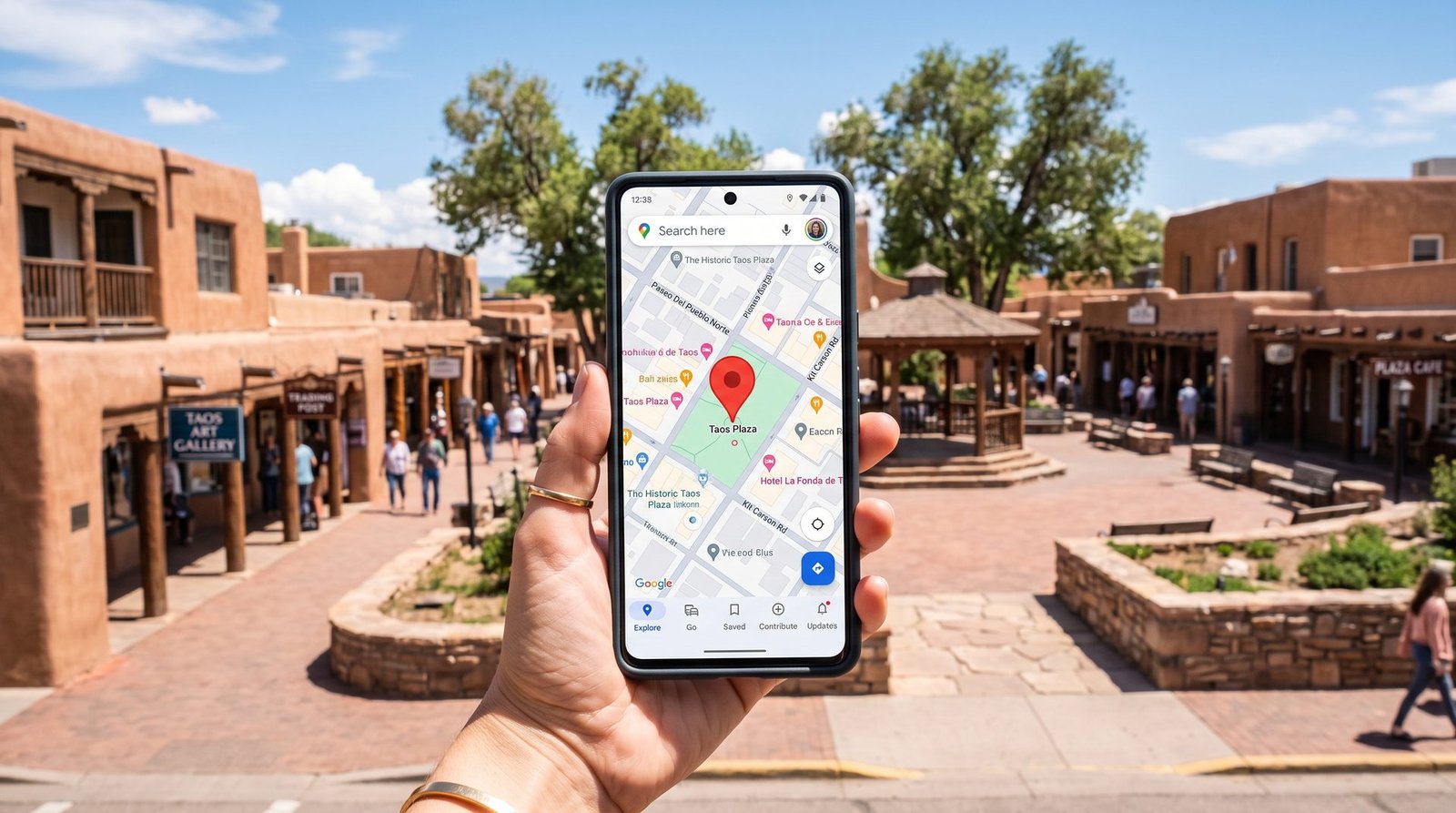
Ranking Signal Groups at a Glance
| Signal group | What it covers | Relative weight |
|---|---|---|
| Google Business Profile signals | Categories, completeness, hours, photos, posts, pin placement | Highest — roughly 32% of map-pack weight (Pexnet, 2026) |
| Reviews | Star rating, review count, recency, velocity, responses | High — a top-10 factor and the trust signal buyers read |
| On-page local signals | Service/area pages, NAP on site, LocalBusiness schema, embedded map | High — decides close contests and powers localized organic |
| Citations | Consistent NAP across directories | Medium — consistency matters more than volume |
| Links & prominence | Local links, brand mentions, overall web presence | Medium — builds over time, hardest to fake |
Eight of those ten come straight out of your Google Business Profile. As one 2026 analysis put it, Google Business Profile signals carry roughly 32% of total map-pack ranking weight — more than any other signal group (Pexnet, 2026, summarizing the expert survey). The practical read: the profile is not a directory listing you set and forget. It is your primary ranking asset.
The Google Business Profile Playbook
Work through this in order — it follows the factor weights above:
1. Nail the primary category
The #1 factor deserves the most care. Choose the single category that best describes what you do (not what you sell to whom). Then add secondary categories for each real service line — but only real ones. A wrong primary category is also the survey's #1 negative factor: miscategorization actively hurts you.
2. Complete everything
Hours (including holiday hours), services with descriptions, service areas, attributes (women-led, veteran-led, LGBTQ+ friendly where true), appointment links, and a keyword-rich business description. Empty fields are ranking surface you are donating to competitors. Our Google Business Profile optimization service exists because this step alone moves most businesses.
3. Keep hours ruthlessly accurate
"Open at time of search" is a top-five factor. Wrong hours do not just lose the ranking — they send customers to a closed door, which earns the one-star review that costs the next ten customers.
4. Post weekly, photograph constantly
GBP posts (offers, seasonal reminders, job highlights) and fresh photos signal an alive, active business. Businesses with photos get significantly more direction requests and calls — and a profile with three stock photos from 2021 reads as abandoned next to a competitor posting this week's work.
5. Fix the pin and the address display
Confirm the map pin sits on your actual entrance, and display the address unless you are a pure service-area business with a genuine reason to hide it. Both are top-ten factors.
How does your profile stack up right now? Our free 10-minute website audit includes a Google Business Profile review — categories, completeness, reviews, and photos benchmarked against the Albuquerque competitors outranking you. Or call +1 505-539-3288.
The Review Playbook
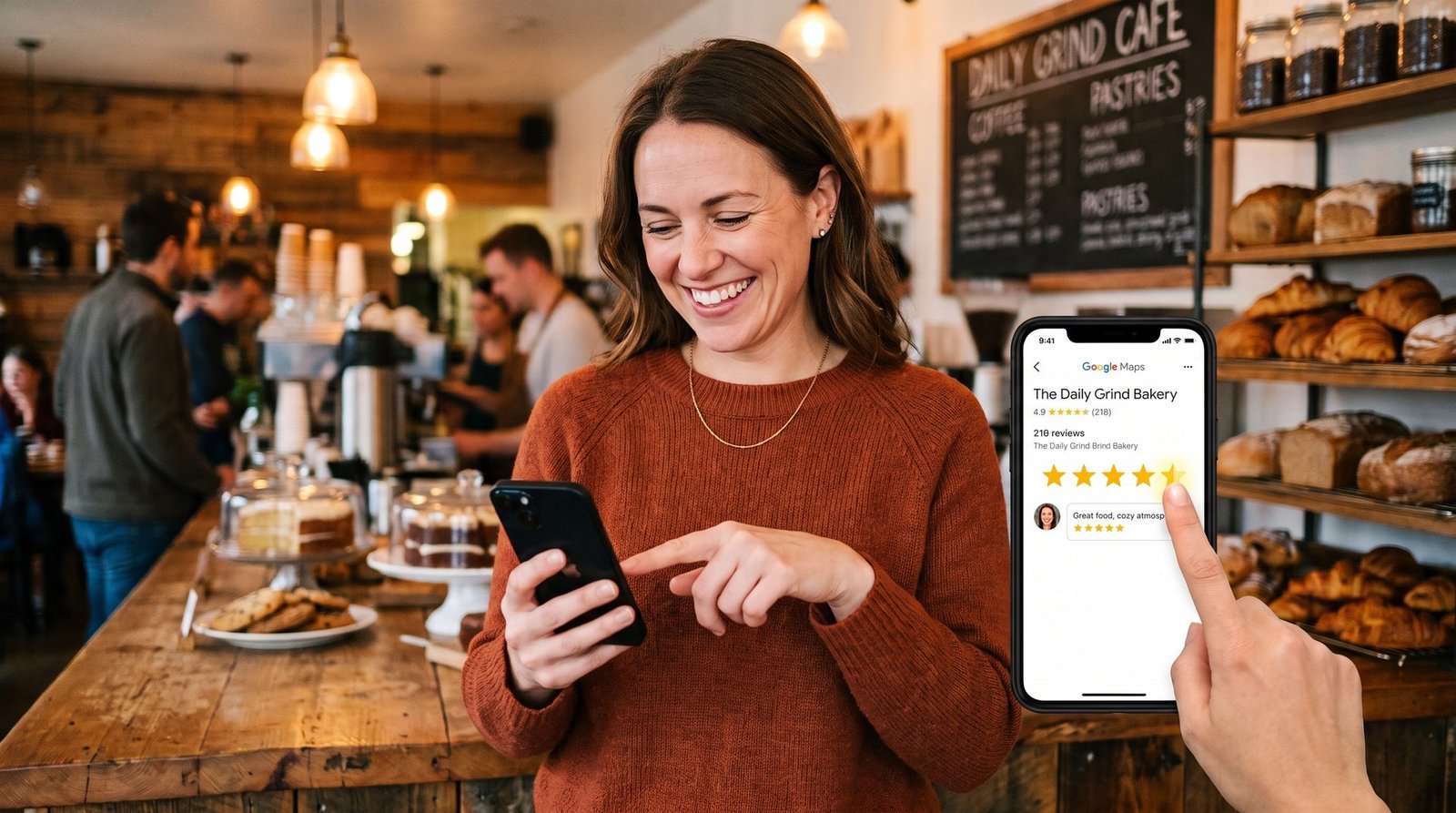
Reviews are the double-threat: a top-ten ranking factor and the thing customers read before calling. The 2026 numbers make the standard brutally clear:
- 97% of consumers read reviews for local businesses; 41% "always" read them — up from 29% a year earlier (BrightLocal, 2026).
- 68% require at least 4.0 stars before considering a business; 31% will only use businesses at 4.5+ (BrightLocal, 2026).
- 47% won't consider a business with fewer than 20 reviews (BrightLocal, 2026).
The playbook:
- Build a system, not a campaign. Ask every happy customer, every time, with a direct review link (a QR code on the invoice works). Sporadic review pushes look manipulative; steady flow looks like a good business.
- Cross 20 fast, then never stop. Twenty is the credibility threshold; after that, recency and velocity matter more than the total. A competitor with twelve reviews this month beats your 200 from 2023.
- Respond to every review. Good, bad, and fake — publicly, professionally, promptly. Responses are read by future customers and signal an engaged business to Google.
- Seed keywords naturally. When customers mention the service and neighborhood in their own words ("great AC repair in Rio Rancho"), it reinforces relevance. Never script reviews — just ask happy customers to mention what you did and where.
Your Website and Citations: The Support System
The profile wins the pack, but two support systems decide close contests:
- Your website's local signals. Dedicated pages per service and service area, your city in titles and headings, LocalBusiness schema, an embedded map, and click-to-call on mobile. For localized organic results (the listings under the map), on-page signals are the #1 factor group — and they reinforce the profile above. This is core local SEO work.
- Citations. Consistent name, address, and phone number across Yelp, Apple Maps, Bing, Angi, BBB, and industry directories. Inconsistencies erode Google's trust in your listing; cleanup is unglamorous and effective.
- Local links. Chamber of commerce, local news, sponsorships, supplier pages — the prominence pillar in action. A handful of real local links beats a hundred directory submissions.
Myths to Stop Believing
The 2026 expert survey scored several long-standing tactics near the very bottom of all 187 factors — and flagged some as actively harmful:
- Geo-tagged photos. Ranked dead last — #187 of 187. Stop paying for EXIF-stuffing services.
- Google Ads boosting organic/maps rank. #185. Ads buy visibility above the results; they do not move your organic or map positions.
- Keyword-stuffing your GBP business name or description. Scored as the most damaging new negative factor. It also risks suspension.
- AI-generated text and photos on your profile. Registered as negative signals with suspension risk. Real photos of real work win.
- "Just get more citations." Citation consistency matters far more than citation volume past the core set. Fifty sloppy listings lose to twenty clean ones.
What This Means for Albuquerque Businesses Specifically
- Proximity cuts both ways. Albuquerque's sprawl means a searcher in Rio Rancho sees different results than one in Nob Hill. Service-area pages for each part of the metro you serve are how you compete beyond your own zip code.
- Trades move fastest. Plumbers, HVAC, roofers, and electricians see the quickest map-pack movement from profile + review work because intent is urgent and competition is profile-driven.
- Professional services need patience. Law firms, clinics, and financial services face review-gated buyers and heavier competition — the same playbook, on a longer timeline.
- Spanish-language intent is underserved. Reviews, posts, and services described in Spanish capture searches competitors ignore. In this market, that is a genuine edge.
What to Do This Week
- Claim and audit your profile. Verify ownership, then score yourself against the top-ten factor list above. Most businesses find three or more fixable gaps in twenty minutes.
- Fix your primary category and hours. The two highest-leverage free changes in local SEO.
- Launch the review system. Direct link, QR code, ask-every-customer rule. Aim to cross 20 reviews as the first milestone.
- Upload ten real photos. Team, trucks, storefront, recent jobs — this week's work, not stock.
- Check your citations. Search your business name and phone number; fix the inconsistencies on the directories that actually rank.
For the full picture — technical site health, content gaps, and competitive benchmarking alongside the profile work — our guide to small business SEO in Albuquerque puts the map-pack playbook inside the complete local strategy.
Frequently Asked Questions
How long does it take to rank higher on Google Maps?
Profile fixes can move the needle in weeks; review velocity and citation work compound over 2–4 months; overtaking an entrenched competitor typically takes 3–6 months of consistent effort. Anyone promising the #1 map spot in days is selling something Google penalizes.
Why does my competitor show up on Google Maps but I don't?
The most common causes, in order: an incomplete or unclaimed profile, the wrong primary category, too few reviews, inconsistent business information across directories, or no local content on the website. The top-ten factor list above is effectively a diagnostic checklist.
Do I need a physical storefront to rank on Google Maps?
No. Service-area businesses (plumbers, electricians, cleaners) can rank without displaying an address — but the 2026 data shows displaying the address is itself a positive factor, so hide it only when you have a genuine reason (like a home address you must keep private).
How many reviews do I need to rank on Google Maps?
There is no magic number, but two thresholds matter: 20 reviews is the consumer credibility floor (47% of buyers won't consider fewer, per BrightLocal 2026), and beyond that, matching or beating your specific competitors' count and velocity is what moves rankings. Recency matters as much as total.
Should I pay for Google Maps ranking services?
Pay for legitimate work — profile optimization, review systems, citation cleanup, local content — not for "guaranteed map rankings," which do not exist. Evaluate any offer against the factor list in this guide: if the seller cannot explain which factors their work targets, walk away.
Does my website affect my Google Maps ranking?
Yes, as a support system. On-page local signals (service pages, schema, NAP consistency) reinforce the profile, and for the localized organic results beneath the map pack, on-page factors are the single biggest group. A strong profile with a weak website loses close contests.
See exactly why competitors outrank you on the map. Claim your free 10-minute website audit — we benchmark your profile, reviews, and local signals against the Albuquerque businesses holding the map pack, with a prioritized fix list. Prefer to talk? Call +1 505-539-3288 or contact our team.
Sources
- Whitespark, 2026 Local Search Ranking Factors (published November 2025; 47 local search experts scored 187 factors) — top Local Pack factors: primary GBP category, proximity, keywords in GBP title, physical address in city of search, open at time of search, high ratings, address displayed, additional categories, review quantity, map pin placement; geo-tagged photos ranked #187; keyword stuffing most damaging negative factor. Via Pixly Digital summary. https://www.linkedin.com/pulse/how-rank-google-local-pack-complete-business-guide-pixly-digital-6kf4c
- Pexnet, "Local SEO Ranking Factors That Actually Matter in 2026" (August 2026) — GBP signals ~32% of map-pack weight; Google's three pillars (relevance, distance, prominence); 47 experts, 187 factors. https://medium.com/@pexnetseo/local-seo-ranking-factors-that-actually-matter-in-2026-ec9ba3febfe5
- BrightLocal, Local Consumer Review Survey, 2026 — 97% read reviews; 41% always read them; 68% require 4.0+ stars; 31% require 4.5+; 47% won't consider fewer than 20 reviews (as cited in QDV's published Insights articles, 2026).
- Backlinko via BrightLocal 2026 analysis — 42–47% of local search clicks go to the map pack (as cited in QDV's published Insights articles, 2026).
- Google's public local ranking documentation — local results are based on relevance, distance, and prominence.