
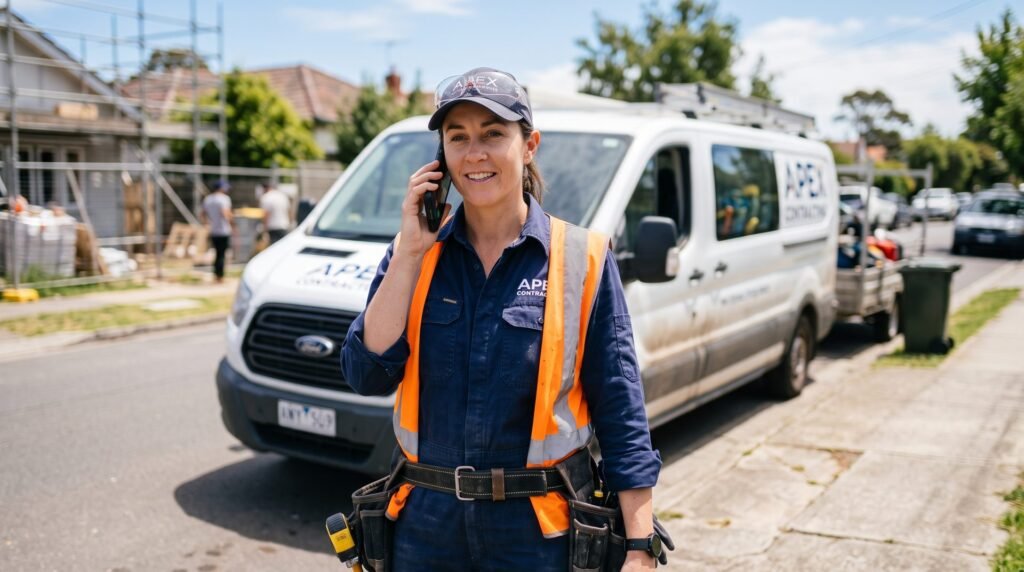
Ask any roofer, plumber, or HVAC owner how they judge their marketing, and you will hear the same answer: booked calls. Not traffic. Not rankings. Not impressions. Calls.
So it is a painful question worth asking honestly: if your website is not generating phone calls, what exactly is it doing? A pretty brochure that sits on the internet does not pay the crew. This guide walks through 11 field-tested tactics to get more phone calls from your website — the same conversion-first thinking we apply on every site we build. No fluff, no vanity metrics: just changes that make the phone ring.
In this article:
- Why the phone call still beats every other contact method
- Make calling frictionless on mobile
- Put your number everywhere it counts
- Speed: the silent call-killer
- Give callers a reason to trust you instantly
- Answer fast — and never lose a missed call
- Capture the callers who were never going to call
- Send ready-to-call traffic to the right pages
- Track every call like revenue depends on it
- FAQs
Why the Phone Call Still Rules for Contractors
Some agencies will tell you the contact form is the modern way. Customers disagree. In a BrightLocal consumer survey, 60% of consumers said they would rather call a business on the phone after a local search — compared with just 16% who prefer email, 15% who would visit in person, and a mere 4% who would use an online contact form (BrightLocal, 2021).
The same survey found that 75% of respondents visited small business websites at least half the time after a local search — and 56% expected the website to have more accurate information than the Google Business Profile itself (BrightLocal, 2021). That means a large share of your callers are forming their decision on your website, then reaching for the phone. If your site makes calling hard, slow, or untrustworthy, they call the next name in the search results instead.
1. Make Calling Frictionless on Mobile
Yet many contractor sites still show their number as plain, non-clickable text — while a competitor is one tap away. Start with this:
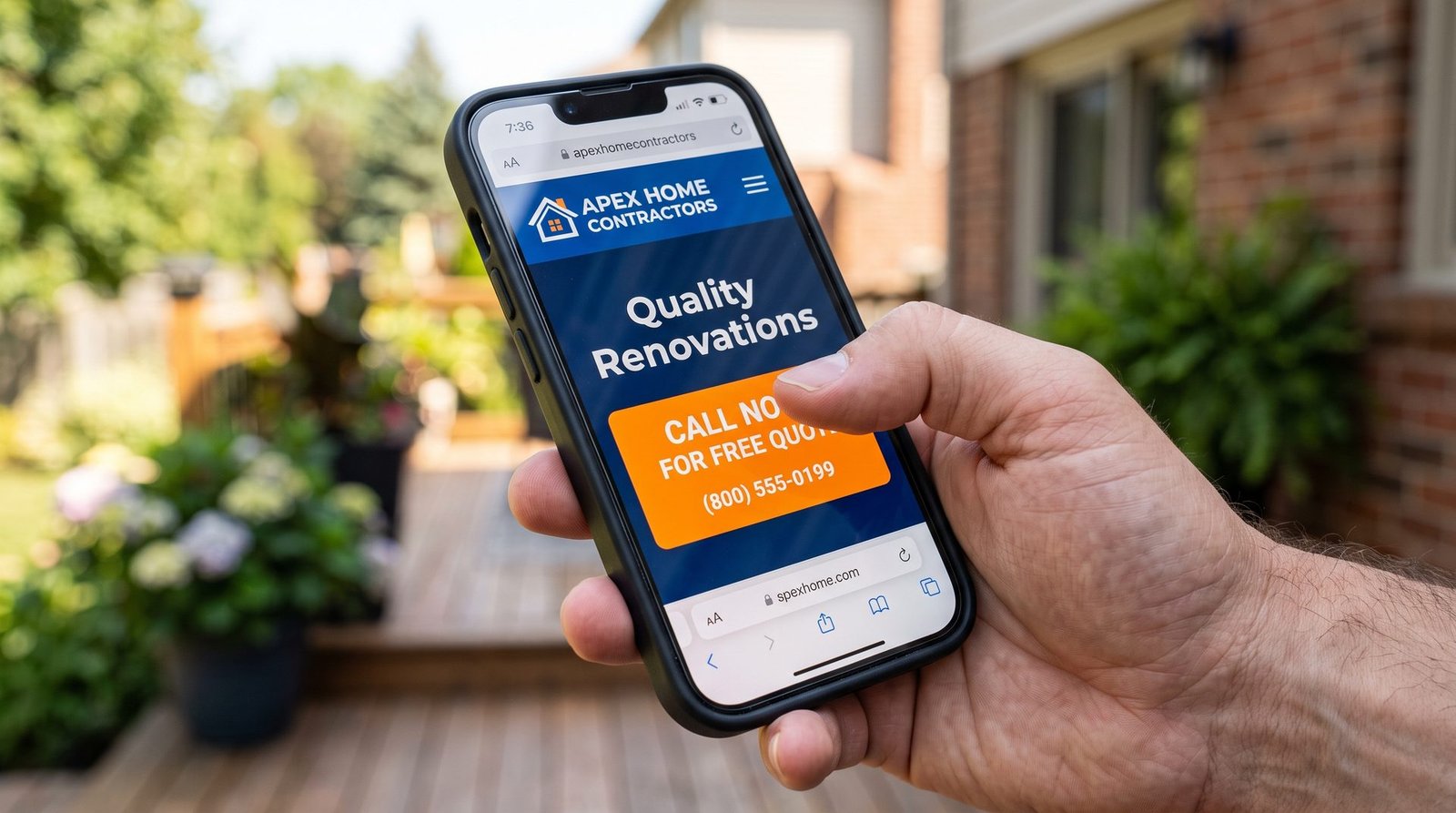
- Make every phone number click-to-call (a
tel:link). This includes the header, footer, sidebar, and every service page. - Add a sticky “Call Now” bar or button that stays visible while visitors scroll on mobile. One dominant action beats a menu of choices.
- Test it on a real phone, not just your desktop browser. Tap every number on the site and confirm the dialer opens with the correct digits.
2. Put Your Number Where Eyes Actually Land
A phone number buried in the footer or on the Contact page alone will cost you calls. Put it where decision-making happens:
- Top-right of the header, on every page, in large readable type. On mobile, this should become a tap-to-call button.
- Above the fold on service pages — a direct, urgent headline with your phone number beside it.
- At the end of every service page and blog post, not just on the Contact page. Many visitors never visit your Contact page at all.
- In your Google Business Profile and local listings, with the exact same number — inconsistent numbers confuse both customers and search engines.
3. Fix Speed: The Silent Call-Killer
Visitors decide whether to call you in seconds, and a slow site burns those seconds before your headline even renders. Google’s own research found that 53% of mobile visits are abandoned if a page takes longer than three seconds to load (Google, 2016/2017). The same research showed bounce probability rises 32% as load time grows from one to three seconds.
For contractors, the practical fixes are usually simple: compress hero images, remove bloated sliders and chat widgets you never check, and move to hosting that can handle real traffic. Page speed is both a ranking signal and a conversion signal — a fast site gets seen by more people and keeps them long enough to call. This is why we build sites with conversion-first web design principles from the ground up: speed is engineered, not patched later.
Quick test: Open your homepage on your phone with Wi-Fi turned off. If your phone number is not visible and tappable within five seconds, you are losing calls right now.
4. Give Callers a Reason to Trust You Instantly
Before dialing, a prospect is silently asking one question: “Is this company legit?” Give them the answer before they finish it:
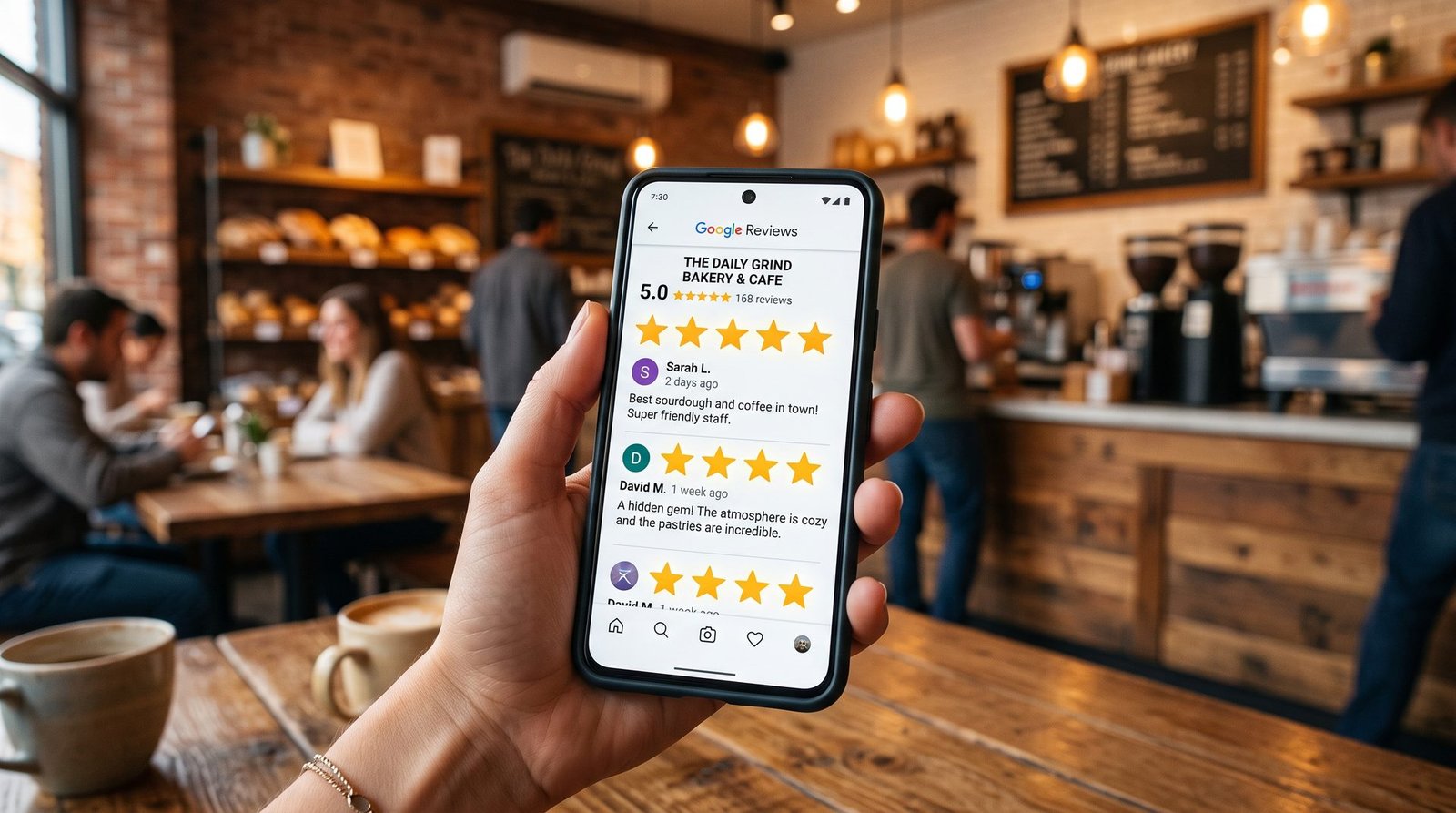
- Show your reviews where the number is. 97% of consumers read reviews before choosing a local business, and 47% will not even consider a business with fewer than 20 reviews (BrightLocal, 2026). Put your star rating next to your phone number in the header and on service pages.
- Display licenses, certifications, and insurance badges — New Mexico contractor license numbers, manufacturer certifications, BBB ratings. These are trust signals that survive a two-second glance.
- Use real photos of your team, trucks, and finished jobs. Stock-photo sites read as “shell company” to a skeptical homeowner.
- Add guarantees (“Licensed, bonded, and insured” plus a satisfaction guarantee) near every call-to-action. Risk reversal is what turns a hesitant browser into a caller.
5. Answer Fast — and Never Lose a Missed Call Again
Here is the uncomfortable truth about call generation: the website’s job is to start the call, but your team’s job is to catch it. A landmark study by Dr. James Oldroyd at MIT’s Sloan School of Management with InsideSales.com found that calling a lead within 5 minutes makes you 100 times more likely to reach them — and 21 times more likely to qualify them — than waiting 30 minutes (MIT/InsideSales, 2007).
A follow-up Harvard Business Review audit of 2,241 U.S. companies found the average first response time was 42 hours, and 23% never responded at all (Harvard Business Review, 2011). In contracting, most jobs go to the first company that picks up. Practical systems that fix this:
- Ring to a real person during business hours. Voicemail during the day is a call graveyard.
- Add a missed-call text-back: an automatic “Sorry we missed you — how can we help?” text within 60 seconds. Many callers will text back instead of calling your competitor.
- Offer online booking as a backup path for after-hours and weekend callers who will not leave voicemail.
- Track who answers and when. If half your missed calls happen at lunch or after 5 PM, that is a staffing problem, not a marketing problem.
If an agency ever promises leads without talking about what happens after the phone rings, treat that as a warning sign — we covered similar red flags in 7 Red Flags Your SEO Company Isn’t Doing Anything.
6. Mid-Article: Is Your Website Actually Built to Ring?
Free 10-Minute Website Audit
We will check your site’s call conversion the way a customer experiences it: mobile tap-to-call, number placement, page speed, and trust signals — and show you exactly what is costing you calls.
👉 free 10-minute website audit — Claim your free audit
📞 Prefer to talk? Call +1 505-539-3288
7. Capture the Callers Who Were Never Going to Call
Even on a call-optimized site, some high-intent visitors will not pick up the phone — they are at work, it is 11 PM, or they just prefer typing. Give them a second path that still reaches your phone:
- A short quote-request form (name, phone, service needed, ZIP code) on every service page. Keep it to four fields — every extra field cuts completions.
- A “Request a Callback” option with a promised time window (“We will call you within 15 minutes during business hours”). This converts phone-shy visitors into phone conversations.
- Live chat or text messaging staffed during business hours. If chat sits unanswered, it hurts more than it helps — treat it like a phone line.
8. Send Ready-to-Call Traffic to the Right Pages
A call is the end of a journey that starts on Google. Someone searching “emergency plumber Albuquerque” is ready to buy; someone reading “how do water heaters work” is not. Match the page to the intent:
- Build one dedicated page per service + service area (e.g., “AC Repair in Rio Rancho”), each with its own call-to-action and number placement.
- Keep your Google Business Profile accurate — hours, services, and a call button — because many callers dial straight from the search results without ever reaching your site.
- Invest in Local SEO Albuquerque so you rank in the map pack where high-intent “near me” callers decide. A call-optimized website multiplies the value of every local ranking you earn.
9. Track Every Call Like Revenue Depends on It
You cannot improve what you do not measure. At minimum:
- Call tracking numbers on your website (different from the one on your Google Business Profile) so you know exactly how many calls the site generates.
- Record calls (where legal, with notice) and review a sample weekly. You will hear whether calls are being answered well, missed, or mishandled.
- Tag outcomes — estimate, booked job, wrong number — so you can compute cost per booked job, not just cost per call.
- Separate SEO calls from ad calls so you know which channel actually rings the phone.
Contractors who track calls consistently find the same thing: the cheapest new customer is the one who already tried to call you.
All 9 Tactics at a Glance
| # | Tactic | The one-line fix |
|---|---|---|
| 1 | Frictionless mobile calling | Every number tap-to-call, plus a sticky Call Now button |
| 2 | Number placement | Header, above the fold, and at the end of every page |
| 3 | Speed | Under 3 seconds on mobile — 53% abandon slower pages |
| 4 | Instant trust | Star rating, licenses, and real photos next to the number |
| 5 | Answer fast | Respond in 5 minutes; missed-call text-back within 60 seconds |
| 7 | Capture the non-callers | 4-field quote form, callback option, staffed chat |
| 8 | Right pages for ready buyers | One page per service and area; accurate Google Business Profile |
| 9 | Track everything | Call tracking numbers, recordings, outcome tags |
Get More Phone Calls From Your Website — Starting This Week
You do not need a full rebuild to start. This week: make every number click-to-call, add a sticky call button, fix the worst speed offenders, and set up missed-call text-back. Then measure.
🚀 Free 10-Minute Website Audit — Find Out Where Your Calls Are Leaking
We will audit your site like a customer: tap-to-call, number placement, speed, trust signals, and local visibility — then hand you a prioritized fix list.
👉 free 10-minute website audit — Get your free audit
📞 Call +1 505-539-3288 — Talk to a real human about more booked calls.
FAQs: Getting More Phone Calls From Your Website
Why is my website not generating phone calls even though I get traffic?
Traffic and calls are different problems. If visitors arrive but do not call, the usual culprits are: the number is hard to find or not clickable on mobile, the site loads slowly, trust signals (reviews, licenses, real photos) are missing, or the site gives no reason to act now. Check those four before spending another dollar on traffic.
Should my website’s main call-to-action be a phone number or a contact form?
For contractors, the phone number — consumers overwhelmingly prefer calling (60% vs. 4% for forms, per BrightLocal, 2021). Use click-to-call as the primary CTA and keep a short quote form as a secondary option for visitors who will not call.
How fast do I need to answer calls from my website?
As fast as humanly possible. Research from MIT and InsideSales.com found that responding within 5 minutes makes you 100x more likely to reach a lead and 21x more likely to qualify them versus waiting 30 minutes (2007). After-hours, use missed-call text-back so no caller waits until morning.
Does website speed really affect phone calls?
Yes. Google found 53% of mobile visits are abandoned when a page takes longer than 3 seconds to load (2016/2017) — those visitors never see your number, let alone dial it. Speed is a conversion fix, not just a technical one.
Do online reviews affect how many calls my website gets?
Directly. 97% of consumers read reviews before choosing a local business, 47% will not consider a business with fewer than 20 reviews, and 31% require 4.5 stars or higher (BrightLocal, 2026). Displaying your rating next to your phone number lifts call conversion because the trust decision happens before the dial.
What is the fastest way to find what is broken on my site?
A structured audit. Our free 10-minute website audit reviews your site exactly the way a ready-to-call customer experiences it — tap-to-call, placement, speed, trust signals, and local visibility — and returns a prioritized fix list in about 10 minutes. You can also call +1 505-539-3288 to walk through it live.